What does this investment in the shoreline mean for property values and market confidence?
When a coastal city protects its shoreline, it protects the foundation of its real estate market.
If you’ve been watching the Myrtle Beach renourishment project unfold, the real question isn’t about sand — it’s about stability. What does this effort mean for property values? Does it change how buyers view coastal risk? Should sellers and investors interpret it as routine maintenance or something more strategic?
The short answer is this: shoreline management is market management.
In Myrtle Beach, where tourism, second homes, and primary residences are all tied to the condition of the beach itself, renourishment is not cosmetic. It directly supports the amenity that drives demand, rental performance, and long-term confidence in the market.
To see the impact clearly, we need to understand what this project actually represents.
What the Myrtle Beach Renourishment Project Really Is
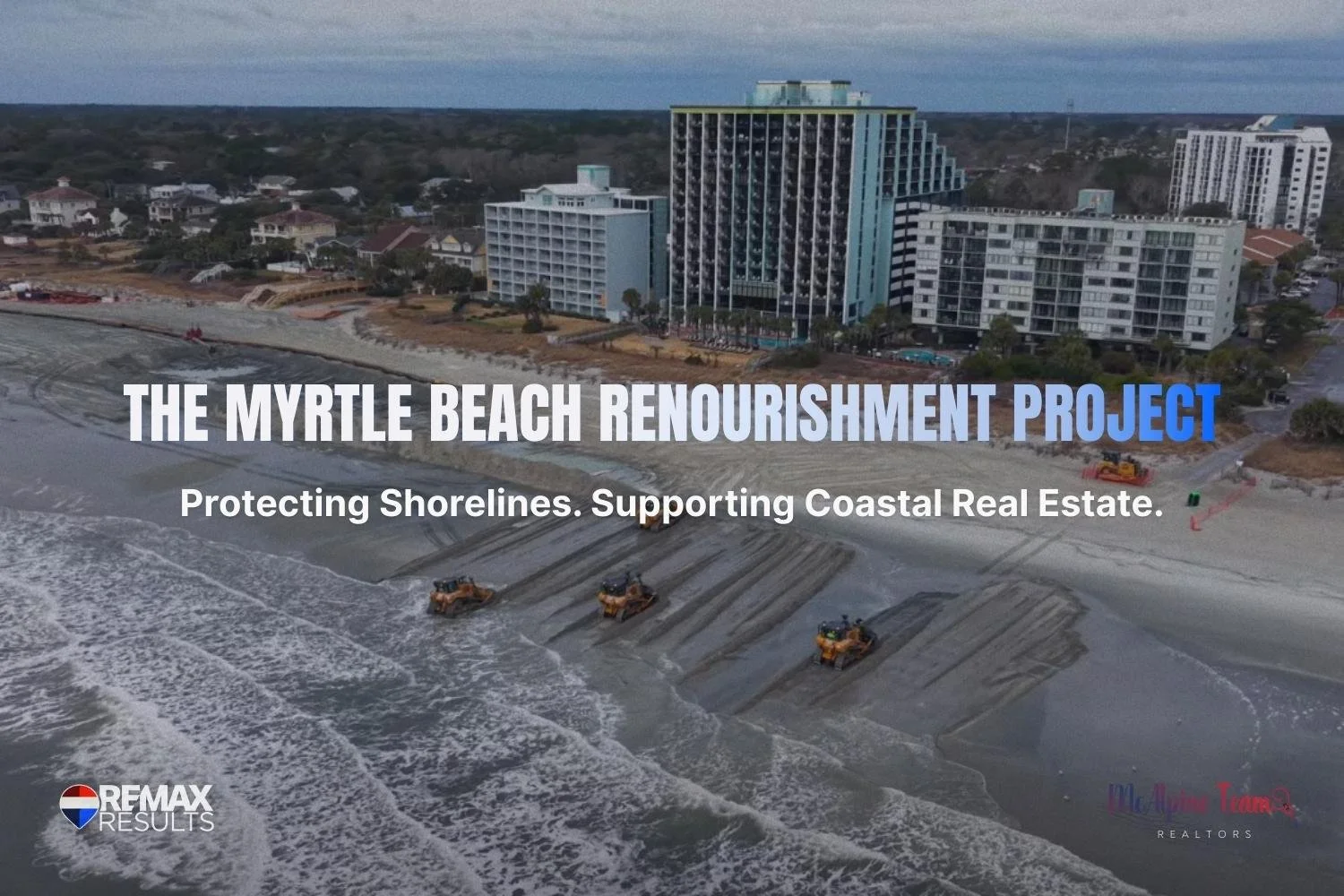
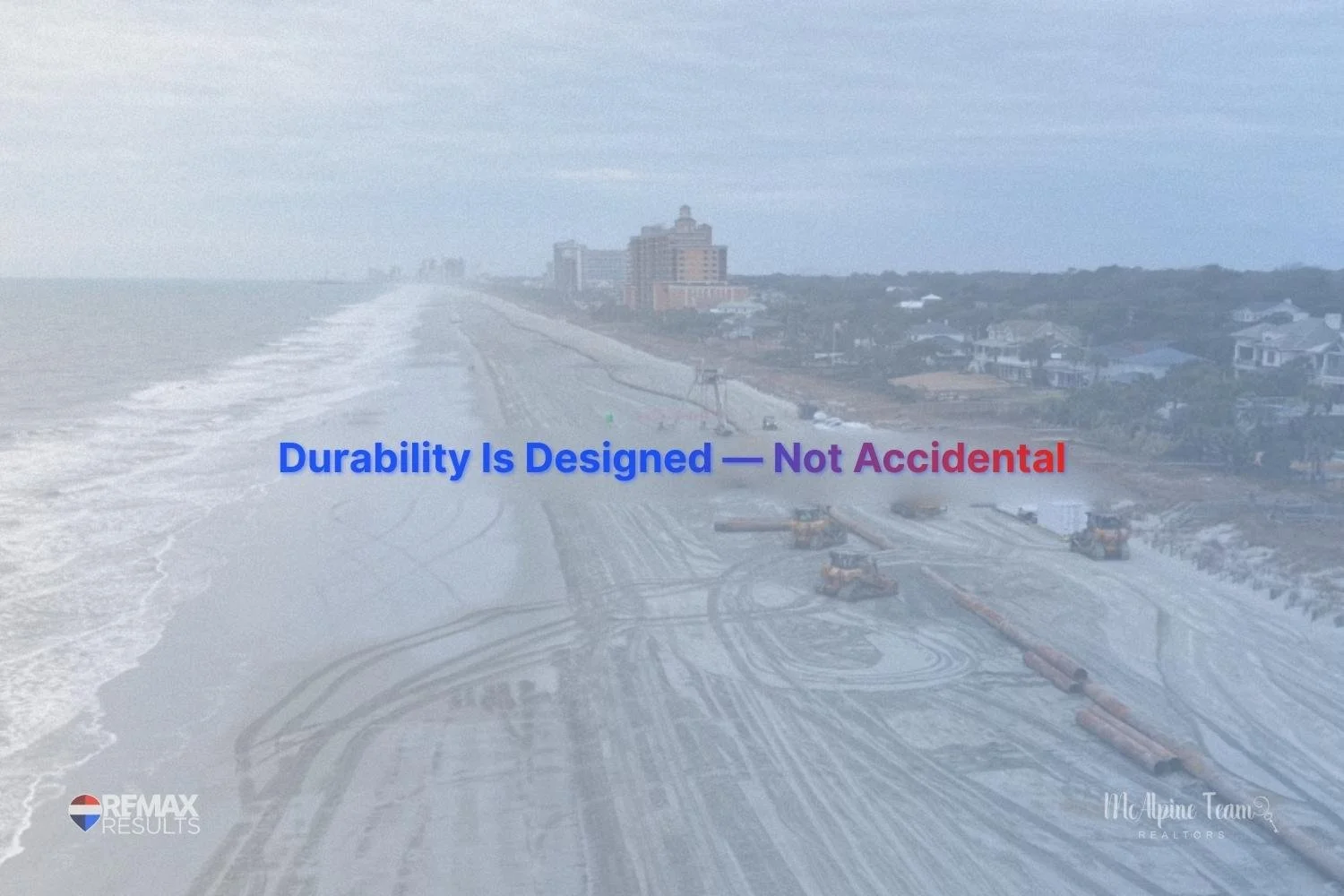
This project is engineered shoreline management — not emergency repair.
Beach renourishment involves dredging compatible sand from offshore borrow areas and placing it along sections of shoreline that have experienced erosion. The objective is to restore beach width and reinforce dune systems, creating a broader buffer between the ocean and developed property. Wider beaches help dissipate wave energy during storms, reducing direct impact on structures and infrastructure. The work follows federal engineering standards and environmental permitting processes. According to the U.S. Army Corps of Engineers coastal storm risk management guidance, nourishment is a recognized long-term protection strategy used in coastal communities nationwide.
It’s a proactive decision — not a reactive one.
Why Successful Coastal Markets Treat Renourishment as Infrastructure
Myrtle Beach is operating within a framework that established coastal markets rely on.
Communities in Florida, New Jersey, and North Carolina regularly conduct nourishment cycles to preserve beach width and storm resilience. These projects are engineered to specific berm and dune targets and monitored over time to evaluate performance. Even internationally, countries like the Netherlands invest in large-scale sand redistribution systems designed to work with natural coastal dynamics. The philosophy is consistent: erosion is natural, but unmanaged erosion threatens economic stability. Long-term coastal markets treat shoreline management as essential infrastructure, similar to drainage systems or road maintenance.
Seen through that lens, the Myrtle Beach renourishment project fits into a broader pattern of durability rather than urgency — which naturally leads to the question of value.
How Beach Width Influences Coastal Property Values
The condition of the shoreline directly shapes how coastal real estate is perceived and priced.
Oceanfront and near-ocean properties derive much of their value from proximity, access, and the quality of the beach experience. When beach width narrows, the physical and visual buffer between the ocean and development shrinks. That can influence both buyer perception and long-term risk calculations. Academic research examining beach nourishment and property values suggests that maintained shorelines help support value stability and reduce exposure to storm-related damage. Lower exposure doesn’t eliminate risk, but it changes how that risk is evaluated in financial and lending decisions.
Buyers may not discuss sediment transport or dune reinforcement. They simply notice whether the beach feels expansive and secure — and that impression shapes what they are willing to pay.
How Buyers Interpret Active Shoreline Investment
Visible coastal management affects buyer confidence in ways that aren’t always obvious at first glance.
When someone is considering purchasing in a coastal market, they’re weighing durability alongside lifestyle appeal. They want reassurance that erosion isn’t being ignored. They want to see evidence of oversight and coordination. An active renourishment project signals that federal and local agencies are engaged in maintaining the shoreline. It reduces ambiguity about whether protection efforts are underway.
You can often see the shift in posture: fewer “what if” questions, more forward-looking conversations, and greater willingness to commit.
Confidence is quiet — but it’s powerful.
What Sellers Should Recognize About Market Perception
Negotiation strength in coastal real estate is often tied to perceived stability.
When buyers feel uncertain about shoreline protection, that uncertainty can appear in pricing discussions. Active renourishment changes the narrative from reactive to proactive. Instead of defending the coastline’s condition, sellers can reference ongoing investment in shoreline protection. This does not override pricing fundamentals or property condition, but it helps reduce one layer of hesitation. For homeowners evaluating timing, reviewing activity across the South Carolina real estate market can offer insight into how coastal inventory is performing relative to inland areas.
Perception doesn’t replace value — but it reinforces it.
The Investor Lens: Demand, Revenue, and Durability
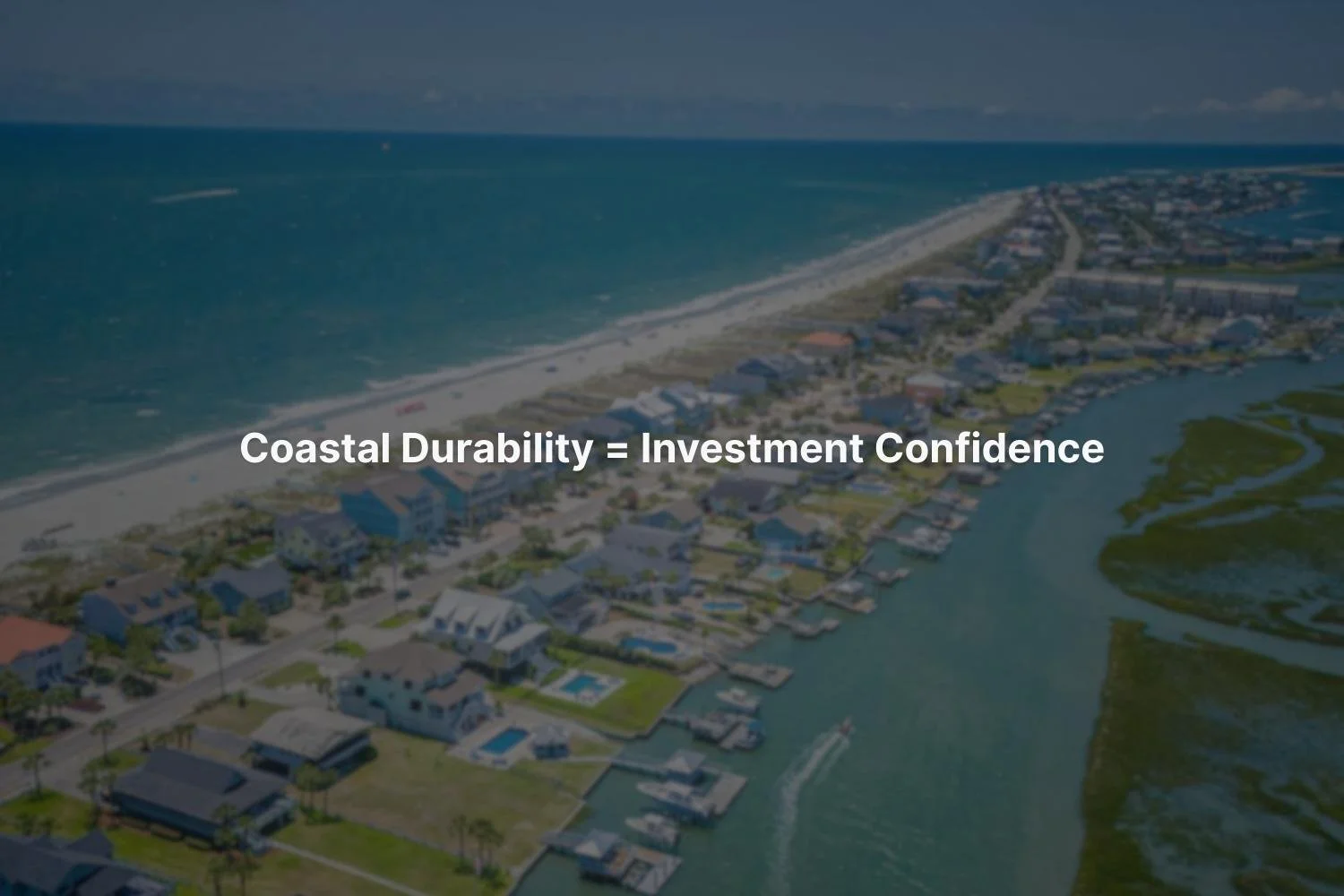
In Myrtle Beach, the beach itself is the economic engine.
Short-term rental demand, second-home purchases, and tourism spending all revolve around shoreline quality. If beach conditions decline significantly, visitor experience can shift, affecting occupancy rates and nightly rental performance. When beach width is restored and maintained, it preserves the core attraction that drives revenue. Investors evaluating risk look beyond the property itself and assess the broader environment supporting it. A maintained shoreline strengthens the long-term revenue thesis.
To understand why that matters, consider the interconnected drivers of rental and resale performance:
Visitor satisfaction tied to beach access and width
Perceived storm resilience influencing insurance and financing
Public infrastructure investment supporting tourism flow
Reduced erosion visibility affecting buyer confidence
Ongoing monitoring that signals structured management
Each of these factors contributes to the overall investment narrative. Remove one, and confidence can wobble. Strengthen them collectively, and durability improves.
In coastal markets, revenue durability and shoreline durability tend to move together.
Coastal Stability Is About Management, Not Permanence
Renourishment reduces vulnerability, but it does not stop natural coastal movement.
Shorelines evolve continuously due to tides, storms, and long-term environmental shifts. Nourishment projects are part of recurring maintenance cycles rather than permanent fixes. Acknowledging that reality is important for balanced expectations. What distinguishes resilient markets from fragile ones is not the absence of erosion — it is the presence of structured response. The current project demonstrates that Myrtle Beach has an active framework in place to address shoreline change.
Managed risk behaves differently than unmanaged risk.
The Broader Economic Signal Behind the Project
Infrastructure investment reflects belief in the region’s long-term relevance.
Significant federal and local funding commitments do not happen casually. The Grand Strand supports jobs, tourism, small businesses, and a growing residential base. Protecting the shoreline protects those interconnected systems. Buyers and lenders interpret visible infrastructure commitment as a sign of regional durability. Over time, these signals shape how markets are perceived nationally.
Markets that demonstrate stewardship tend to attract capital that thinks long-term.
What Homeowners Should Pay Attention To Now
Awareness allows property owners to act strategically rather than react emotionally.
Monitor completion timelines and observe how beach width changes post-project. Pay attention to how quickly visitor activity rebounds after construction phases conclude. Watch how insurance discussions evolve alongside visible shoreline improvements. If you’re considering selling or refinancing in the next few years, factor these broader infrastructure trends into your timing decisions. And if you want a clearer sense of how your specific property fits into today’s landscape, reviewing insights through the South Carolina real estate advisory page can provide perspective.
Steady markets tend to reward steady decision-making.
Stability starts at the shoreline.
A Grounded Perspective on the Myrtle Beach Renourishment Project
The Myrtle Beach renourishment project is less about sand and more about long-term market stability.
It does not promise immunity from storms. It does not eliminate coastal change. But it does demonstrate organized, funded, and measurable stewardship of the shoreline that anchors the region’s economy. For buyers, that reduces uncertainty. For sellers, it strengthens positioning. For investors, it reinforces the foundation of demand.
In coastal real estate, durability is rarely accidental — it is maintained.