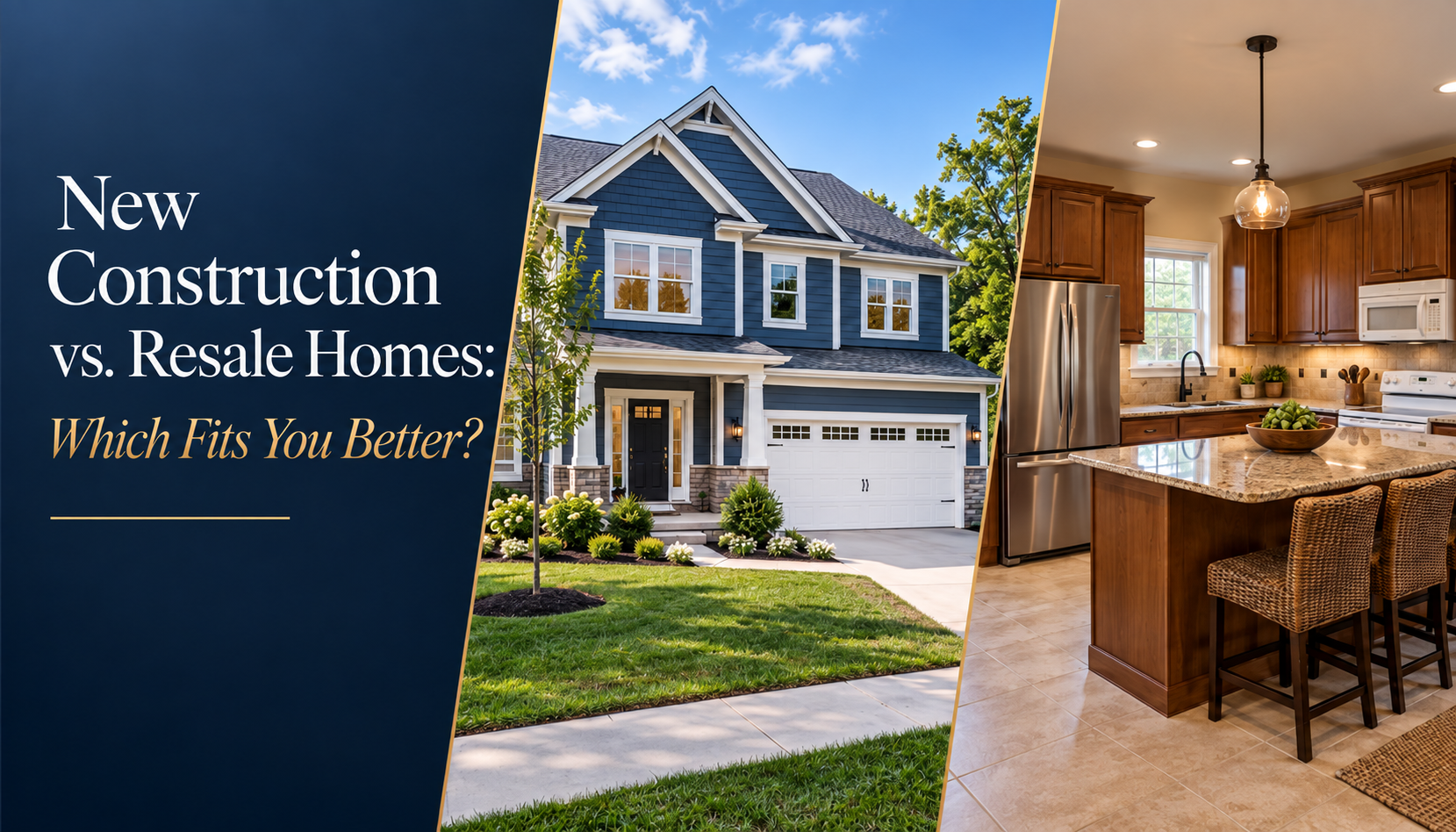
A brand-new home and an established resale can both be good purchases, but they solve very different problems for a buyer.
The real question is not whether new construction is automatically better than resale. It is which option fits your budget, timeline, tolerance for maintenance, preferred location, and the way you actually want to live in the home. Buyers sometimes assume that new construction will always cost more, while resale will always be the more affordable option, but that comparison is not always that simple. Builder incentives, repair needs, financing, upgrades, and ongoing ownership costs can all change the picture. Across Myrtle Beach and communities like Carolina Forest, buyers can find both newer developments and established resale neighborhoods, making the comparison especially relevant.
The best choice usually becomes clearer once you stop comparing “new versus old” and start comparing the full cost and lifestyle of each home.
Start With What You Are Actually Paying For
The sticker price is important, but it does not tell you the full cost of either a new construction or resale home.
New homes have traditionally carried a price premium because buyers are getting unused systems, current finishes, modern floor plans, and less immediate repair work. But market conditions can narrow that gap, which is why buyers should compare actual available homes instead of assuming resale will always be cheaper. National data on new residential sales can help provide broader context for how newly built homes are being priced and sold. Local conditions will still matter much more when comparing two specific properties.
Builders may also compete for buyers in ways an individual homeowner cannot. Depending on the community, builder, property, and financing arrangement, incentives can include closing-cost assistance, upgrades, mortgage-rate buydowns, or price adjustments. Information about builder incentives and new-home affordability can help buyers understand why the advertised price is only one part of the deal.
Resale homes work differently. A homeowner may be willing to negotiate on price, repairs, closing costs, closing date, or other terms, but that flexibility depends on the individual seller and the competition for the property.
The better comparison is not simply asking which home has the lower list price.
It is asking what you will actually spend to buy, finance, improve, and maintain each one.
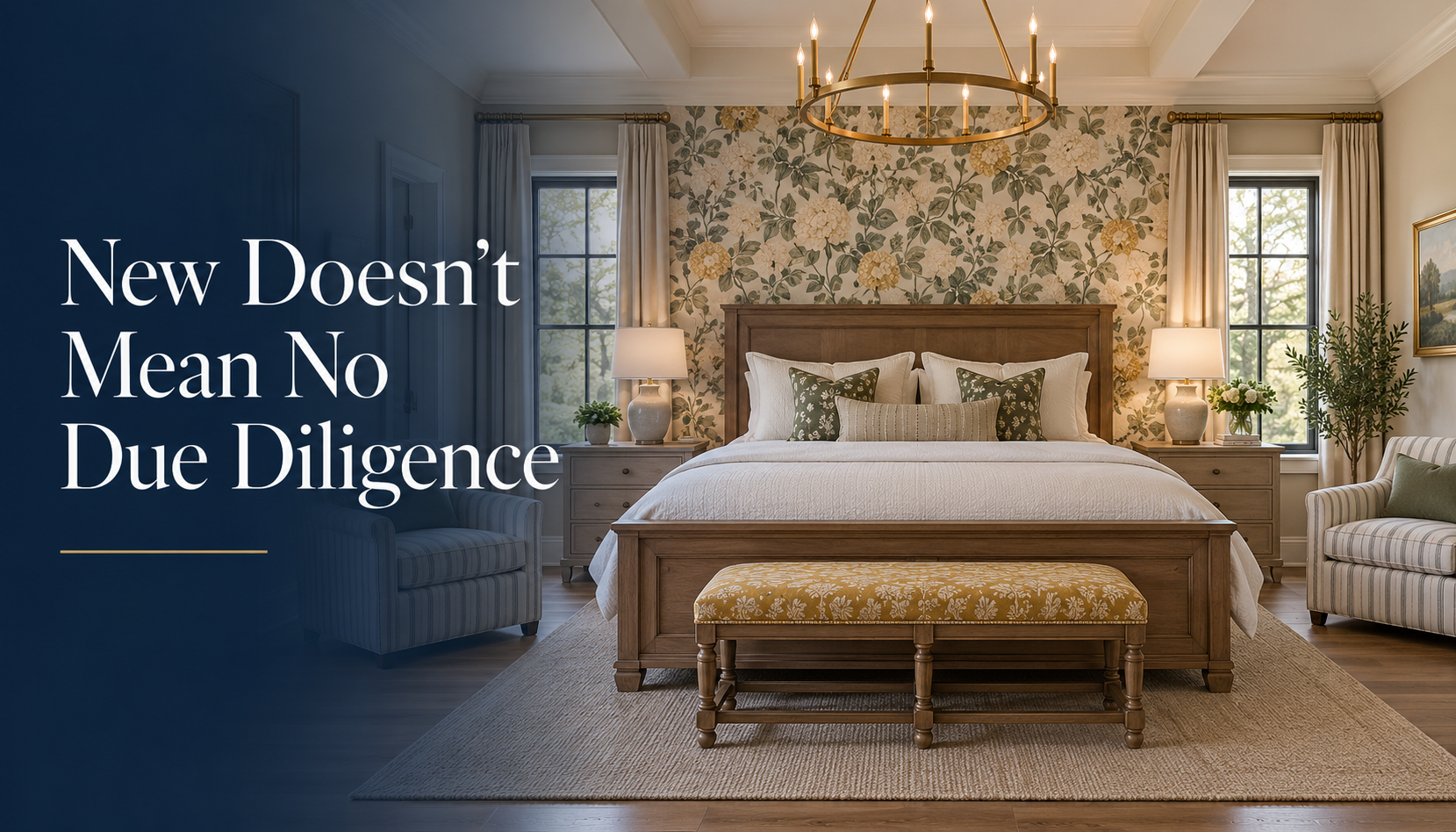
A newly built home still deserves careful review before closing.
New Construction Can Offer a More Predictable Start
One of the biggest attractions of new construction is knowing that most of the major components of the home are starting at the beginning of their useful life.
The roof, HVAC equipment, plumbing, electrical systems, appliances, flooring, and finishes are generally new. That does not mean a newly built home will be maintenance-free or defect-free, but buyers are less likely to face the same immediate replacement cycle they might encounter in an older property. Many new homes also include some type of builder warranty. The Federal Trade Commission provides helpful information about builder warranties for new homes including why buyers should understand exactly what is covered, for how long, and what procedures apply if a problem develops.
New construction can also appeal to buyers who want current layouts and updated features. Open living areas, larger closets, flexible rooms, newer electrical capacity, updated insulation, energy-efficient windows, and modern heating and cooling systems may already be incorporated into the design.
Energy efficiency can be another advantage, although buyers should confirm the actual specifications rather than assuming every newly built home performs the same way. Programs such as ENERGY STAR standards for new homes provide a useful example of how certain homes can meet defined efficiency standards beyond basic construction requirements.
For buyers who want fewer immediate projects and a home that feels current from the day they move in, those benefits can have real value.
But new does not mean there is nothing to inspect or verify.
Resale Homes Often Give You More Location and Character Choices
A resale home may offer something new construction cannot easily reproduce: an established neighborhood.
Older communities can have mature trees, larger or more varied lot sizes, established landscaping, distinctive architecture, and streets that already have a clear personality. You can see how the neighborhood functions because much of it is already built. Surrounding homes are in place, traffic patterns are easier to observe, and nearby amenities are less theoretical than they may be in a developing community.
Location can also become a major advantage. In established parts of Myrtle Beach, resale homes may put buyers closer to familiar shopping, restaurants, major roads, schools, employment centers, or long-standing neighborhood amenities. In a growing area such as Carolina Forest, buyers may be able to compare newer construction and established resale communities within the same broader location.
There is also value in being able to see exactly what you are buying. With a completed resale home, you can walk through the actual rooms, look out the actual windows, stand in the yard, listen to neighborhood noise, and understand how the home sits in relation to surrounding properties.
Before choosing between new construction and resale, compare:
commute and everyday driving time
lot size and privacy
neighborhood maturity
HOA fees and amenities
nearby development plans
storage and floor-plan functionality
renovation or repair needs
A home is more than its countertops, finishes, and construction date.
Sometimes the strongest reason to choose a resale home has less to do with the house itself and more to do with where that house lets you live.
The Cost of Making It Yours Works Differently
Both new and resale homes can require additional spending after you decide to buy, but the expenses often appear in different places.
With new construction, buyers sometimes focus on the advertised base price without realizing how quickly design choices can increase the total. Flooring, cabinetry, countertops, lighting, appliances, trim packages, screened porches, fences, blinds, landscaping, electrical upgrades, and other selections may or may not be included. A model home may also display features that are upgrades rather than standard.
That is why buyers should ask for a detailed list of what is included before comparing a new build with a resale property.
A resale home presents the opposite challenge. What you see is generally what already exists, but you may want or need to change it. Painting, flooring, kitchen updates, bathroom work, windows, roofing, HVAC replacement, landscaping, plumbing, or electrical improvements can all become part of the real acquisition cost.
Research comparing the <u>cost of owning new construction versus an older home can be useful as background, but no national estimate replaces a property-specific comparison. A newer home may reduce some near-term maintenance costs, while an older home that has already received major updates may be more predictable than its age suggests.
The useful question is not, “Which house needs less money?”
It is, “Where will I be spending that money, and does that spending fit my budget?”
New Construction Has Its Own Due-Diligence Questions
Buying directly from a builder can feel straightforward, but buyers still need independent information and careful contract review.
A builder’s sales representative works for the builder. That does not make the process adversarial, but buyers should understand whose interests each person represents. Builder contracts can also differ significantly from the agreements buyers may see in a traditional resale transaction. Deposits, completion timelines, inspections, change orders, financing incentives, warranties, and procedures for construction delays all deserve attention.
Construction timing is especially important. A quick-move-in home that is already completed is very different from choosing a lot for a home that still needs to be built. Weather, materials, labor availability, permitting, inspections, and other factors can affect the schedule.
Buyers should also look beyond the house itself. In a developing neighborhood, today’s open view may become another phase of homes, a new road, commercial development, or community amenities later. It is worth understanding what is planned around the property instead of assuming the surrounding environment will stay exactly as it appears on the day you visit.
An independent home inspection can still be valuable with brand-new construction. New materials can be installed incorrectly, items can be missed, and a fresh set of eyes can identify issues that deserve attention before closing or during the builder’s warranty period.
The house may be new.
Your due diligence should still be thorough.
A Resale Home Requires a Different Kind of Investigation
With an existing home, the biggest unknown is usually not what will be built next, but what has already happened to the property.
Age alone does not determine condition. A 25-year-old house that has been carefully maintained and thoughtfully updated may require less near-term work than a much younger home that has suffered from deferred maintenance. That is why buyers should look at the age and condition of major components individually instead of judging the entire property by the year it was built.
The roof may have been replaced recently. An older HVAC system may still be working well but approaching the point where replacement should be planned. Windows may be original. Plumbing or electrical components may have been updated over time. Renovations may look attractive but still deserve inspection.
Seller disclosures, available repair records, permits, inspections, and professional evaluations can all help build a more complete picture.
The goal is not to treat every issue as a reason to walk away. Every home requires maintenance, and older properties naturally show wear over time. The goal is to understand which expenses are normal, which are significant, and which should influence what you are willing to pay.
A resale home becomes easier to evaluate when you replace the vague question “Is this house too old?” with a more useful one:
“What will this particular home need from me over the next several years?”
Which One Gives Buyers More Negotiating Room?
The answer can change from one neighborhood, builder, or property to the next.
A builder may have different reasons for offering incentives than an individual resale seller. Builders often consider how recorded sale prices affect future sales within a community, which means they may prefer to negotiate through closing-cost assistance, financing incentives, design upgrades, appliances, or lot premiums rather than making a large reduction to the base price.
A resale seller has different priorities. One homeowner may care most about price. Another may prefer a particular closing date, fewer contingencies, or greater certainty that the transaction will close on time.
That is why buyers should compare the entire offer instead of focusing on one concession.
A lower interest rate may matter more than a small price reduction. A seller-paid repair may matter more than an appliance credit. A builder upgrade may have real value if it is something you planned to pay for anyway.
The strongest deal is not always the one with the biggest discount.
It is the one that improves your overall cost without pushing you toward a home that does not actually fit your needs.
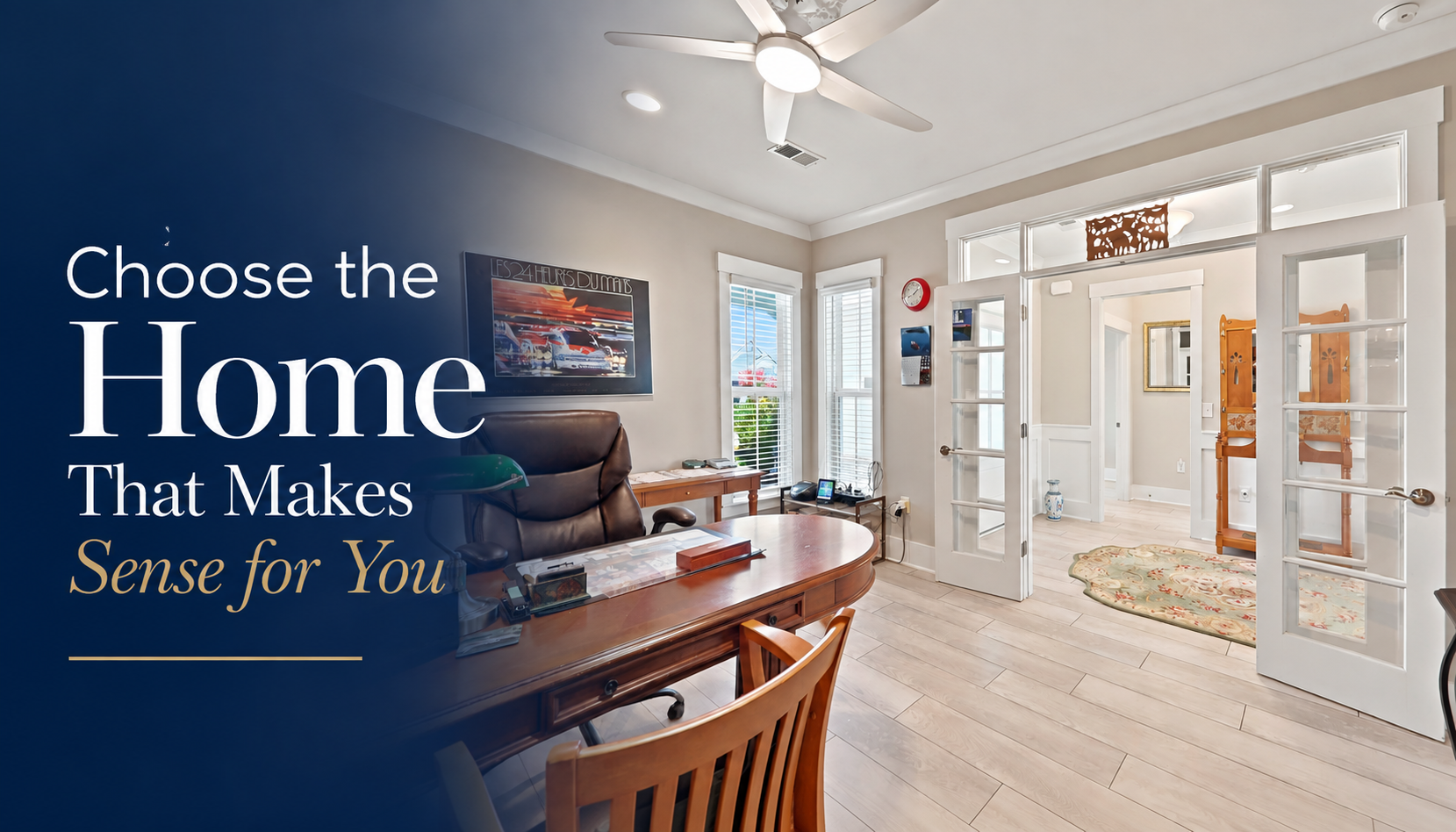
The better choice is the home whose costs, location, condition, and features fit your priorities.
So, New Construction or Resale?
Neither option wins automatically.
New construction may be the better fit if you value newer systems, modern layouts, customization, potentially lower near-term maintenance, and the possibility of builder incentives. A resale home may make more sense if you prioritize an established location, mature neighborhood, larger or more distinctive lot, architectural character, or the ability to see exactly what you are purchasing before you make an offer.
For many buyers in the Myrtle Beach area, the most useful approach is to look at both.
You may begin convinced that you want a brand-new home and discover that an established neighborhood fits your daily life better. Or you may assume a resale home will save money, only to find that builder incentives and fewer immediate improvements make new construction more comfortable within your actual budget.
If you are still comparing options, the McAlpine Team South Carolina home search can help you review available homes and communities without limiting your search to only new construction or only resale.
When you are ready to compare specific homes, builder terms, neighborhoods, or resale opportunities, you can contact The McAlpine Team to talk through the differences that matter for your situation.
The better home is not necessarily the newest one or the one with the longest history.
It is the one whose location, condition, costs, and trade-offs make the most sense for the life you plan to
live there.